Common Stingray
Dasyatis pastinaca
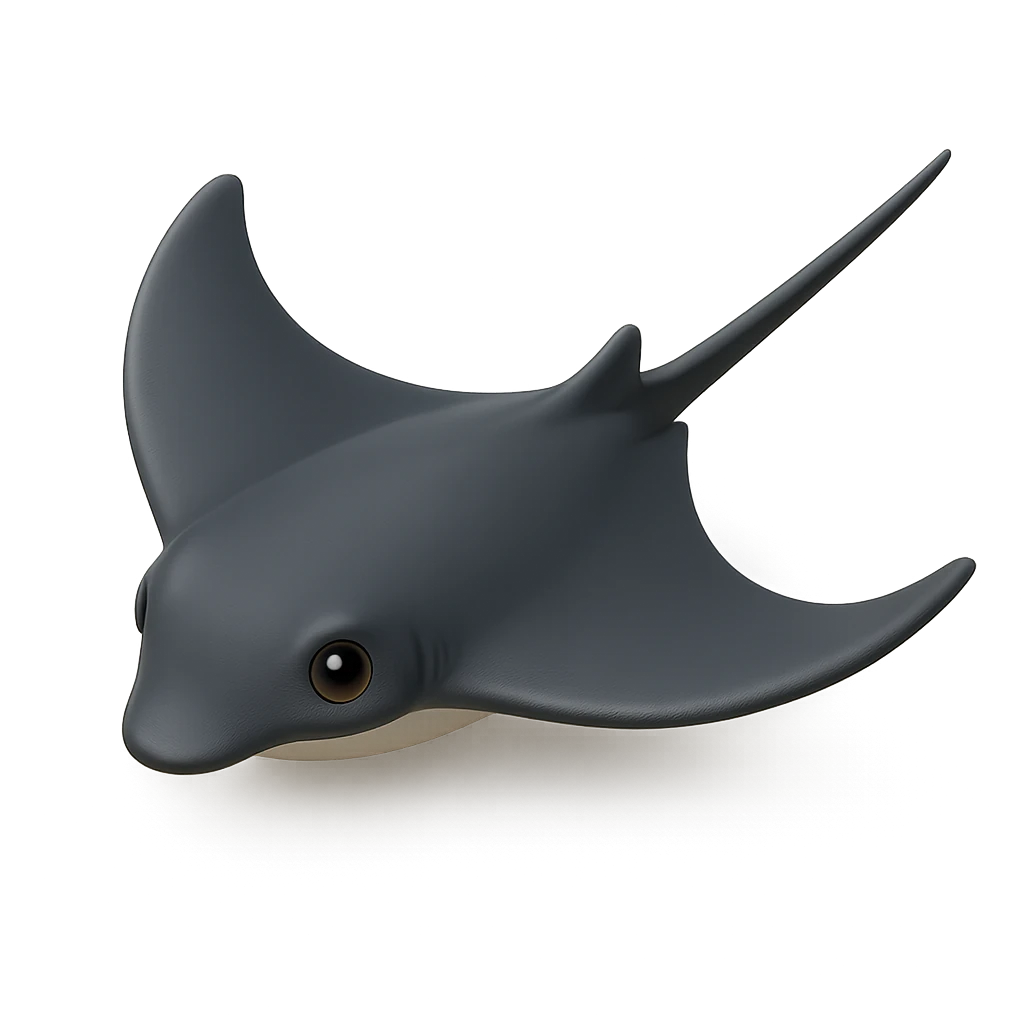
- Group: Ray
- Typical depth: 5 to 200 m
- Max size: 69.5 cm
- For divers: dangerous
- IUCN status: VU
The common stingray patrols sandy and muddy bottoms in coastal waters, slipping into lagoons, shallow bays and estuaries to feed on bottom fish, crustaceans and molluscs. It bears live young after about four months and carries a venomous tail spine that makes it dangerous to handle.
Taxonomy: Animalia › Chordata › Elasmobranchii › Myliobatiformes › Dasyatidae › Dasyatis
Species data via the World Register of Marine Species (WoRMS), AphiaID 105851.
FAQ
- How deep does the Common Stingray live?
- The Common Stingray (Dasyatis pastinaca) is typically found at 5 to 200 m.
- Is the Common Stingray dangerous to divers?
- The Common Stingray can be dangerous; divers should keep their distance.
- How big does the Common Stingray get?
- The Common Stingray grows to about 69.5 cm.