Pelagic Stingray
Pteroplatytrygon violacea
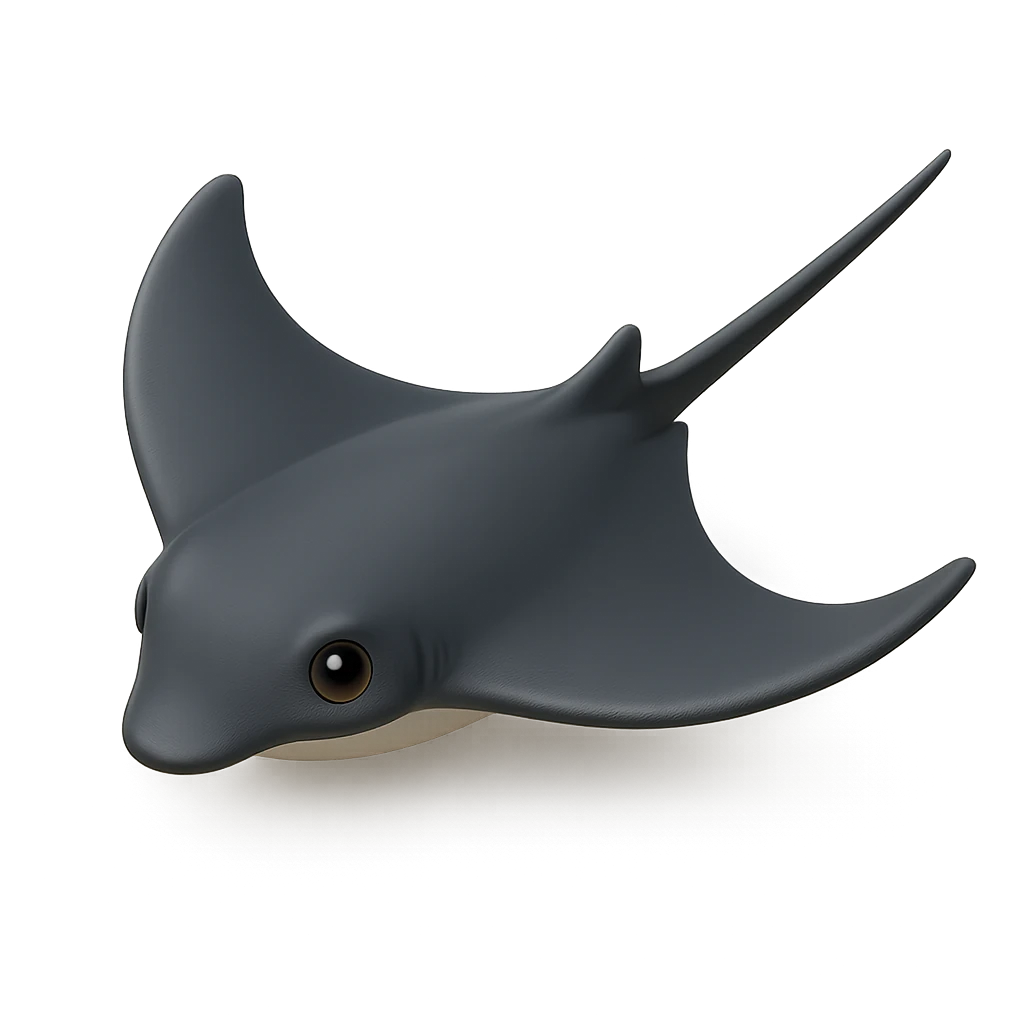
- Group: Ray
- Typical depth: 1 to 381 m
- Max size: 96 cm
- For divers: dangerous
- IUCN status: LC
Possibly the only fully open ocean member of its family, the pelagic stingray drifts through warm seas mostly in the top 100 metres rather than resting on the bottom. It carries a venomous spine on its tail and feeds on jellyfish, squid, crustaceans, and fish, often dying as bycatch on tuna longlines.
Taxonomy: Animalia › Chordata › Elasmobranchii › Myliobatiformes › Dasyatidae › Pteroplatytrygon
Species data via the World Register of Marine Species (WoRMS), AphiaID 158540.
FAQ
- How deep does the Pelagic Stingray live?
- The Pelagic Stingray (Pteroplatytrygon violacea) is typically found at 1 to 381 m.
- Is the Pelagic Stingray dangerous to divers?
- The Pelagic Stingray can be dangerous; divers should keep their distance.
- How big does the Pelagic Stingray get?
- The Pelagic Stingray grows to about 96 cm.